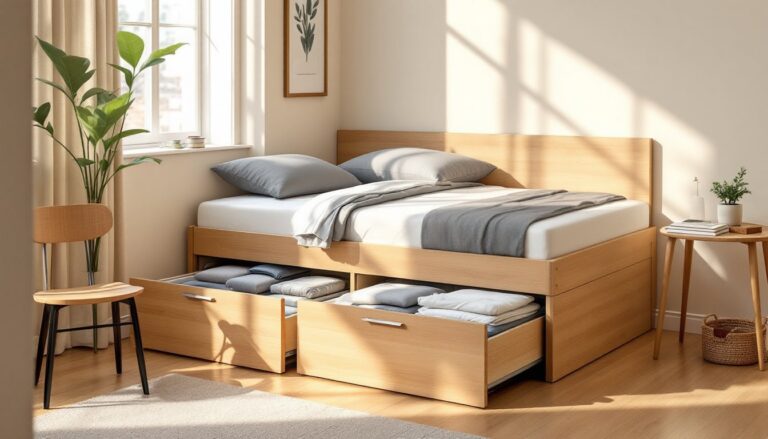
That space beneath your bed? It’s prime real estate you’re probably wasting. The average bed frame offers 12 to 20 cubic feet of storage capacity, enough to stash seasonal clothes, extra linens, or gear that’s cluttering your closets. Under bed storage bins transform dead space into functional square footage without adding furniture or taking up floor area. Whether you’re working with a cramped studio apartment or just need to corral the overflow from overflowing closets, the right bins can reclaim that hidden zone and keep your bedroom organized year-round.
Table of Contents
ToggleKey Takeaways
- Storage bins for under bed can unlock 12 to 20 cubic feet of hidden capacity, transforming wasted bedroom space into functional organization without adding floor clutter.
- Rolling bins with ball-bearing casters are best for frequently accessed items, while vacuum-sealed bags compress seasonal clothing by 50–75%, and hard-sided plastic containers provide superior moisture protection.
- Accurate measurements are critical—check clearance height, account for mattress overhang, and leave a ½-inch buffer to ensure bins fit properly and lids open freely.
- Fabric bins are lightweight and collapsible, making them ideal for lightweight items like linens and off-season clothes, though plastic options better resist moisture and pests in humid climates.
- Bed risers (3–8 inches tall) can create additional clearance for low-profile frames, while moisture control through silica gel packets protects delicate fabrics and keepsakes from humidity damage.
- Test-fit one bin before buying a full set, and verify product dimensions in reviews since retailers often list external measurements including handles and wheels rather than usable interior space.
Why Under Bed Storage Is a Game-Changer for Small Spaces
Under bed storage solves a basic problem: most bedrooms waste 15–20% of their total floor space on an empty void. That gap between your bed frame and the floor isn’t doing anything except collecting dust bunnies.
Using this zone effectively means you can clear out bulky items from closets, free up shelf space, and reduce visual clutter. For renters who can’t install built-ins or homeowners avoiding a costly closet renovation, bins are a no-drill, reversible solution. They’re especially useful for seasonal rotation, winter coats and boots go under the bed in May, while summer gear tucks away come October.
One often-overlooked benefit: under bed storage keeps items protected from light and temperature fluctuations, which is ideal for preserving fabrics, delicate holiday decorations, or sentimental keepsakes. Just make sure your bedroom doesn’t have moisture issues: crawl spaces and slab foundations can sometimes wick dampness up through flooring, so check for condensation before stashing anything fabric-heavy long-term.
If your bed sits directly on the floor or has a platform base with drawers already built in, you’ll need to work around those constraints. Consider bed risers (usually 3 to 8 inches tall) to lift a low frame and create clearance. Most risers support 1,000 to 1,200 pounds per set and cost $15–$30 for a four-pack.
Types of Under Bed Storage Bins: Finding the Right Fit
Not all bins are created equal. The right choice depends on what you’re storing, how often you need access, and the clearance height under your bed frame. Here’s a breakdown of the four most common types and where each excels.
Rolling Bins with Wheels
Rolling bins are the workhorse option for under bed storage. They typically come in hard plastic or canvas over a rigid frame, with four swivel casters attached to the bottom. Clearance heights range from 5 to 8 inches, so measure carefully, some beds only offer 6 inches of space.
The wheels make retrieval easy, even when bins are fully loaded. Look for models with ball-bearing casters rather than cheap snap-on wheels: the former roll smoothly on carpet and won’t bind under weight. Many rolling bins include a hinged or removable lid to keep dust out while still allowing quick access.
Best for: frequently accessed items like shoes, workout gear, kids’ toys, or craft supplies. Also ideal for heavier loads (books, tools) since you won’t be dragging weight across the floor. Products designed for convenient storage solutions often feature reinforced corners and clear window panels for quick identification.
Vacuum-Sealed Storage Bags
Vacuum-sealed bags aren’t technically bins, but they’re a popular under bed storage method, especially for compressing bulky textiles. You load the bag, seal it, then use a vacuum hose to suck out the air. Volume can shrink by 50 to 75%, turning a puffy comforter into a flat package.
These bags work best for seasonal bedding, winter coats, and out-of-season clothes. They’re not ideal for anything you need quick access to, since you’ll need to re-vacuum every time you open and reseal. Also, prolonged compression can flatten down fill and synthetic insulation, so don’t store high-loft jackets or pillows this way for more than a few months.
Most vacuum bags are made from multi-layer polyethylene or nylon, which provides a moisture barrier. Still, if your bedroom has high humidity, toss in a silica gel packet to absorb any residual dampness. Bags typically come in packs of 4 to 6 and cost $20–$40 depending on thickness and brand.
Hard-Sided Plastic Containers
Hard-sided plastic bins, think the classic Rubbermaid or Sterilite totes, offer the most protection. They’re rigid, stackable (though you won’t stack under a bed), and often come with latching lids that seal out dust and pests.
Standard under bed dimensions are around 28–32 inches long by 16–18 inches wide by 6–8 inches tall. Check the actual height: some manufacturers list external dimensions including the lid, which can add an extra inch. Translucent plastic lets you see contents at a glance, while opaque versions hide clutter if your bed frame has open sides.
These bins excel at protecting against moisture, making them a smart choice for fabric items, documents, or anything you want to keep pristine. They’re also easy to clean, just wipe down with a damp cloth. Drawback: they don’t have wheels, so pulling a heavy bin out from under a queen or king bed can be awkward. Consider models with built-in handles or rope grips on both ends.
Fabric Bins with Lids
Fabric bins, usually made from canvas, polyester, or non-woven polypropylene, are lightweight, collapsible, and often the most affordable option. Many feature a zippered lid or flip-top closure to keep dust out. Heights run from 5 to 10 inches, and some designs include a clear vinyl window on the front for visibility.
The main advantage is flexibility: when you’re not using them, fabric bins collapse flat for storage. They’re also gentler on hardwood or laminate flooring than plastic bins, which can scratch if dragged. Many cleaning experts who’ve tested storage containers recommend fabric options for lightweight items like linens, scarves, and off-season clothes.
Downside: fabric doesn’t provide a hard barrier against moisture or pests. If you live in a humid climate or have had issues with silverfish or carpet beetles, opt for plastic instead. Also, fabric bins without a rigid frame can sag when loaded, making them harder to slide in and out on carpet.
How to Measure Your Under Bed Space Before Buying
Buying bins before measuring is a rookie mistake that leads to returns and frustration. Here’s the process:
1. Measure clearance height. Use a tape measure to check the distance from the floor to the underside of the bed frame’s side rails or center support beam, whichever is lower. Don’t measure to the top of the mattress: that’s irrelevant. Write this number down in inches.
2. Account for the mattress overhang. Most mattresses extend 1 to 2 inches beyond the bed frame on all sides. If you want bins completely hidden, subtract that overhang from your clearance measurement. If you don’t mind a bin edge peeking out, you can use the full height.
3. Measure length and width. Measure the usable floor space under the bed from the inside edge of one bed leg to the other, both lengthwise and widthwise. Note any center support beams, these will split your storage area into zones and limit bin size. A queen bed is nominally 60 x 80 inches, but actual under bed space might only be 54 x 74 inches after accounting for the frame.
4. Check door and drawer clearances. If your bed has a footboard, headboard with drawers, or nightstands tucked close, make sure bins can slide out without hitting obstacles. Measure the path a bin will travel when you pull it out.
5. Add a ½-inch buffer. Don’t buy bins that exactly match your measurements. Leave at least ½ inch of vertical clearance so lids can open and bins don’t scrape the frame. Similarly, leave ½ to 1 inch of horizontal wiggle room on each side for easier access.
Once you’ve got your dimensions, cross-reference them with product specs before ordering. Many retailers list only external dimensions, which include handles, wheels, and lid height. Read reviews to confirm actual usable interior space. If you’re stocking up on multiple bins, buy one first to test-fit before committing to a full set.
Organizing your bedroom with bins that fit properly is half the battle. Pair accurate measurements with the right bin type, and you’ll turn wasted space into a well-organized asset. For more ideas on decluttering hidden zones, consider how effective under bed storage strategies can transform other areas of your home. Whether you’re prepping for a seasonal swap or just tired of tripping over overflow, the right bins make all the difference.